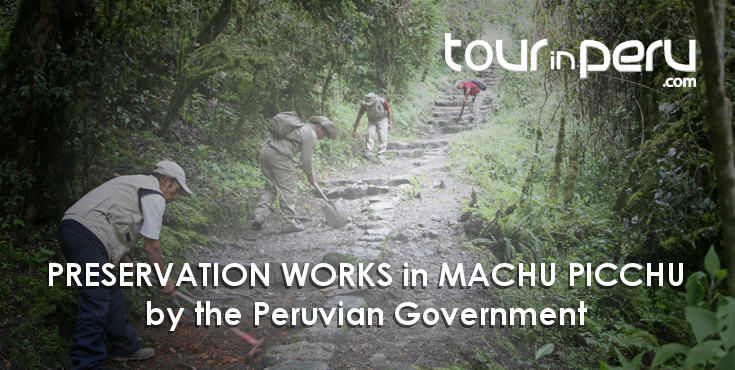
Machu Picchu is important for many reasons, among them being a World Heritage Site and one of the Seven Wonders of the Modern World. Peruvian tourism and culture officials have conducted key preservation works in the citadel. Read here how you can help too.
The Original Machu Picchu Citadel
Back in the days of the empire, around 1430 to 1532 a.C., the total population of the territory was around 6 million people, with a royal elite of just a few hundreds, mostly living in Cusco (elite families were organized in groups called panacas). Machu Picchu itself was conceived as a luxurious countryside retreat for royalty and also as a sanctuary for religious rituals. When the nobility were in Cusco City, the place was taken care of by some servants.
Since its discovery in 1911, it has become a top travel destination, and nowadays it receives 5 thousand visitors every day, on two long shifts, reaching about 150 thousand monthly. In the meantime, our government officials saw mandatory to carry on preservation works and establish rules in order to keep the citadel available for tourists.
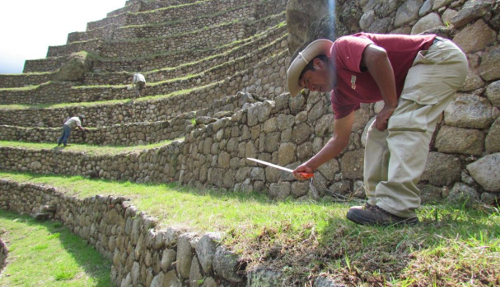
Each year the managers carry out this admirable task in Machu Picchu.
Preservation Works at the Ruins
- In Inca times, all the site’s buildings had roofs and during the centuries it was “lost”, the citadel was covered by thick vegetation. Thus, rain was not a problem. After 1911, engineers warned that rain falling inside the constructions will start loosening their foundations, with the consequence of them getting inclined and eventually collapsing. Additionally, the ground level was likely to begin lowering, to a depth of 15 cm, which also compromised the stability of the heavy stone monuments and of the site’s areas and paths. Thus, preservation works were aimed at greatly improving the draining system, uniting the old Inca one with a new made by modern engineers. Also, serious works of strengthening of the complex’s terrain were conducted, with great success, because otherwise there would have been monuments damaged and sections of the site with big holes and landslides.
- The preservation works extended to the Huayna Picchu, the higher mountain in every postcard of the citadel. There are Inca ruins along the trail as well and even a tunnel. They also were improved in draining efficacy and reinforced to prevent any possibility of ground damage or falling rocks.
- You can help conservation too: using tennis shoes or boots with soft soles, not using any pointed-tip item like walking poles, selfie sticks, umbrellas, walking canes, tripods or baby carriages whose wheels will press the ground. All pointed-tip items must be covered with a soft, rubber tip. Neither climbing on the monuments walls, standing or sitting on them, pushing or tackling them in any way. All these aspects are included on Machu Picchu touring regulations and will lead to sanctions if infringed.
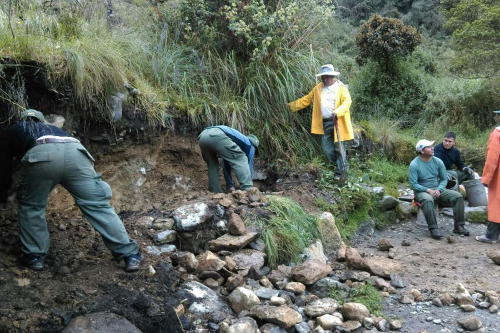
Here doing the maintenance of the Inca Trail is suitable for its visitors.
For the Inca Trails
Another goal of both the Peruvian government and local authorities is the conservation of all the routes of the several Inca Trails. This initiative requires constant care by everybody (hikers, guides, porters, authorities, etc) on the following aspects: preservation of the whole flora and fauna along the paths, no damaging of the archaeological sites across the route, no contamination of forests, lakes and rivers and an adequate management of waste generated by the touristic activity within the region.
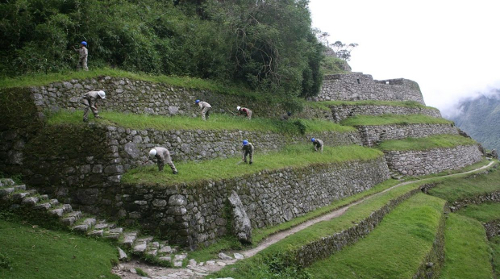
Once the cleaning of the Inca road is finished, tourists are reopened.
An important part of these measures is the annual day of garbage collection along the Inca Trail paths, every February, which is also sponsored by TOUR IN PERU. Although we always brief our clients about disposal regulations for all our packages, there are still people touring with informal travel agencies which do not properly comply with those guidelines. But luckily the amount of wrongfully managed litter is decreasing each year.
Let’s keep the Inca Trails and the Machu Picchu citadel wonderful places always! Remember these guidelines so they will be neat and available for the present and the future.